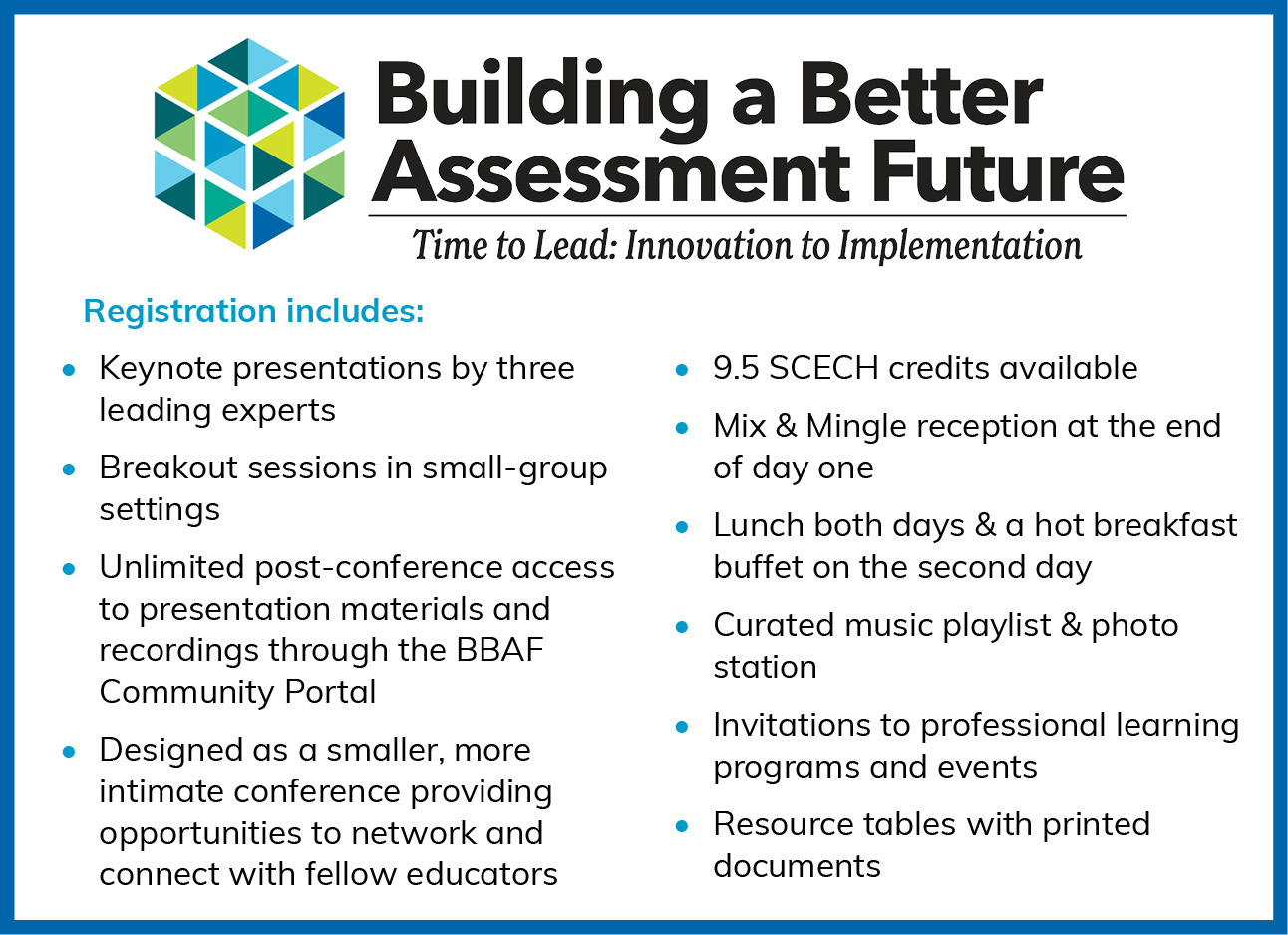
REGISTER
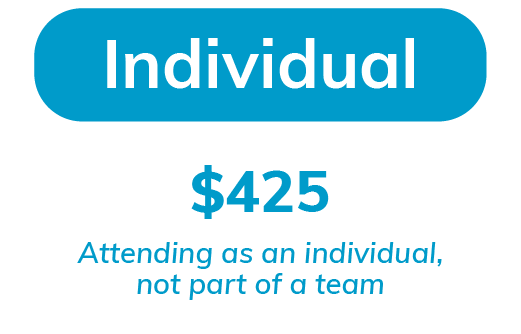
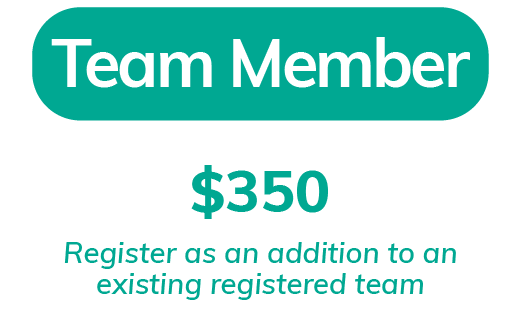
Register as an individual, an entire team (3 or more members), or as a team member of an existing registered team.
Please note: If registering an entire team, please wait to register an entire team until you have ALL team members' names and emails.
9.5 SCECH credits available
KEYNOTE PRESENTERS:
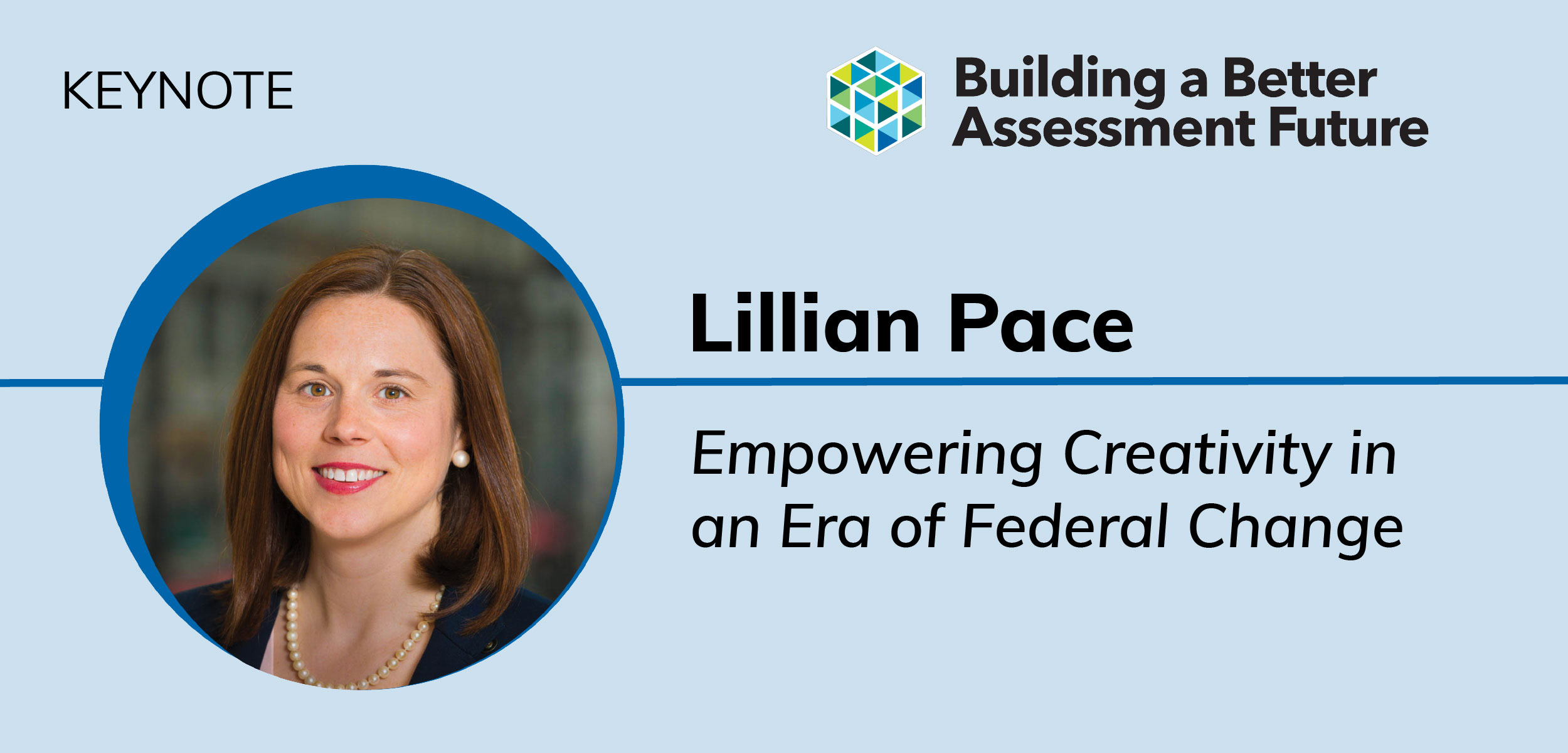
Lillian Pace is the Vice President of Policy and Strategic Advancement at KnowledgeWorks. During her time at KnowledgeWorks, Lillian has served as a national thought leader on education innovation with an emphasis on the development of student-centered assessment and accountability systems. Lillian directs the organization’s policy and advocacy strategy, engaging leaders at all levels of the education system to design and implement policy conditions that enable student-centered learning. She also shapes the organization’s partnerships strategy, facilitating strategic collaborations that help KnowledgeWorks and its network of national and state change-makers accelerate systems transformation. She spent nearly a decade on Capitol Hill advising policymakers on K-12 and higher education policy. Lillian received her Master of Public Policy degree from George Washington University and her Bachelor of Arts degree from Washington and Lee University.
BBAF keynote description:
How can disruption in federal K–12 education create opportunities for state and local assessment innovation? This keynote address will examine the evolving education landscape and its impact on assessment systems. An exploration of the shifting role of the federal government will uncover new possibilities for innovation. Examples of promising assessment innovation will provide insights on how to better meet the needs of educators, students, and communities. These bright spots offer valuable lessons and raise important questions about how to build systems that are more relevant and useful. Ultimately, this address will deepen understanding of the federal role in K–12 assessment and present ideas for how the field might evolve in an era of growing state and local leadership.
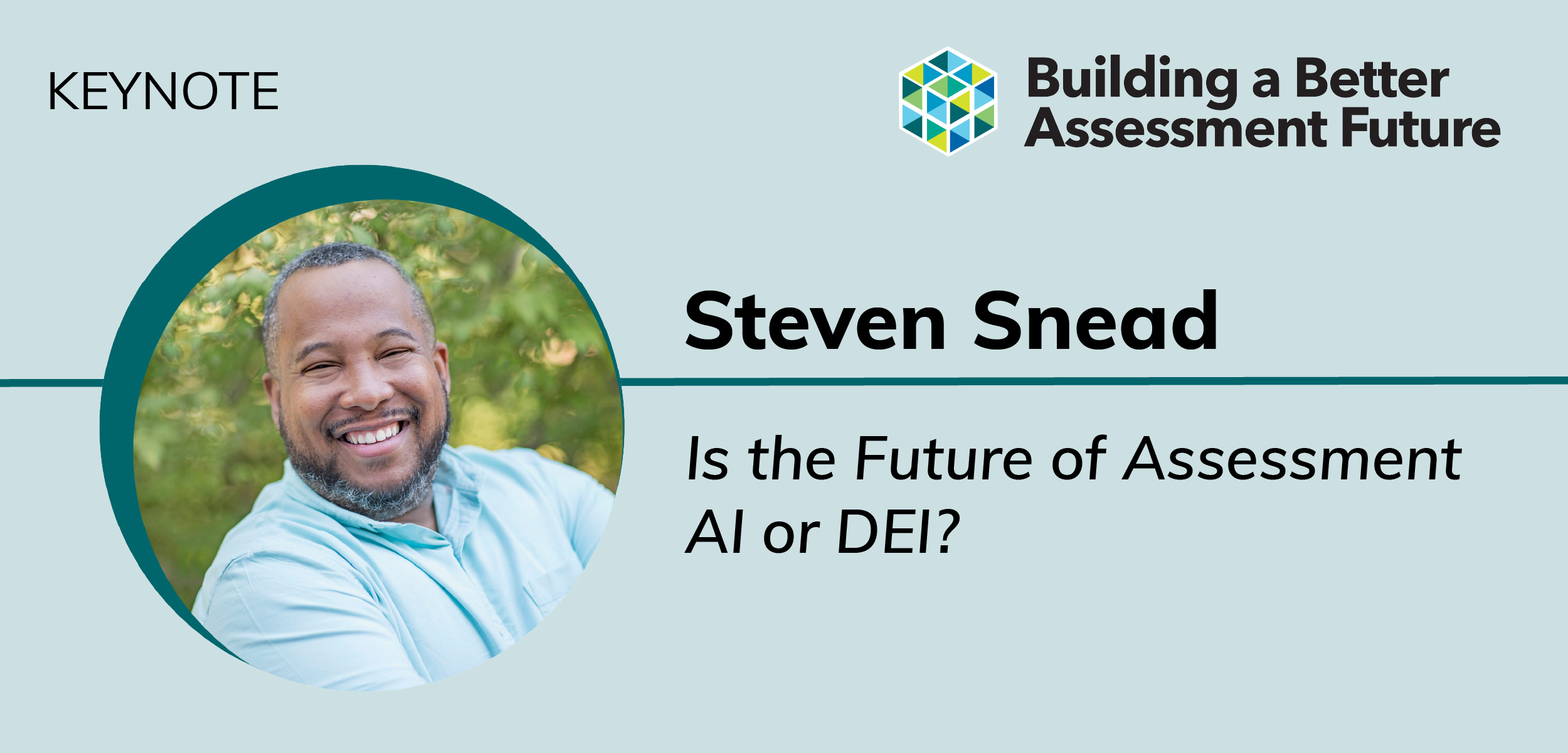
Steven Snead serves as the Supervisor of Curriculum & Assessment at Oakland Schools. His team is responsible for providing educators across dozens of districts and charter schools with professional learning, resource development, and consultation to support deep learning for all students. He is also a member of the Board of Directors for the Michigan Assessment Consortium, helping to promote assessment literacy across the state of Michigan. He’s given numerous local, statewide, and national presentations on assessment focused practices, including district assessment design, formative assessment, MTSS, and equitable assessment practices. Steven is a proud graduate of Cass Technical High School in Detroit. He holds a B.A. in Secondary Education from the University of Michigan and a M.Ed. from Wayne State University. He completed his doctorate in educational leadership and policy analysis at the University of Missouri. The focus of his research explored how teachers use interim benchmark data in instructional decision-making.
BBAF keynote description:
As Artificial Intelligence (AI) rapidly reshapes K-12 schools, education faces a defining question: will technological innovations be the hallmark of the next generation of assessment, or can we design assessments that are both technologically advanced and deeply human-centered? This keynote cuts through the hype to explore how AI and diversity, equity and inclusion (DEI) can collide, conflict, and ultimately co-create a more just, accurate, and actionable assessment future. We’ll explore emergent research around the use of AI in educational assessment, and map research-informed practices to the Michigan Assessment Consortium’s Components of an Equitable Assessment System, shedding light on actions that teachers and school leaders can take to advance assessment. Expect bold insights, real tensions, and a vision that refuses to choose between technology and humanity.
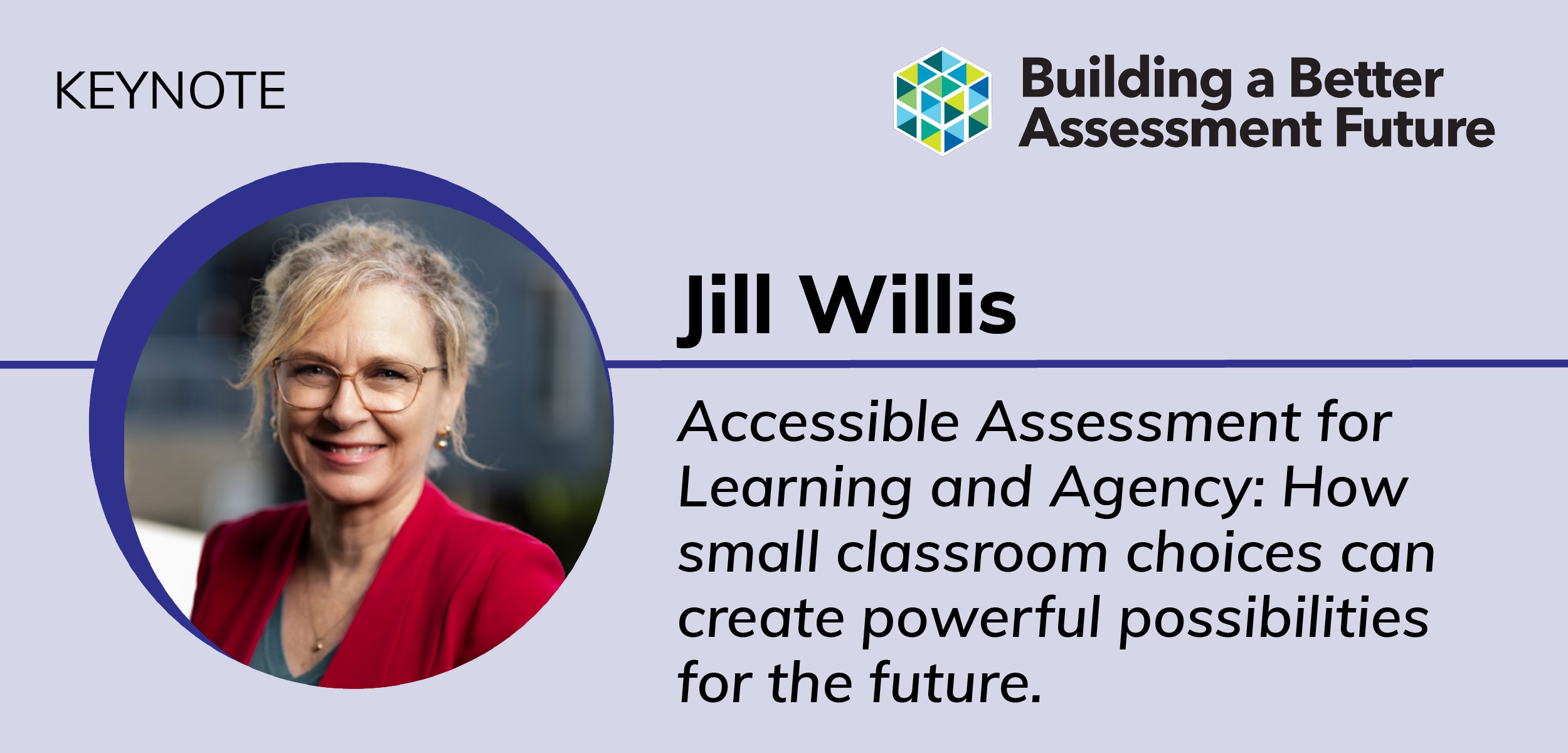
Jill Willis is a Professor of Education at Queensland University of Technology, Brisbane Australia. She researches the social structures of classroom assessment and learning spaces to make recommendations for improving teacher and student agency. Her research investigates how learners navigate performance expectations in assessment systems, so learners of all ages can be supported to experience greater success and agency. This interest has led her to teach about assessment for learning, leadership of change, learning spaces and middle leadership. Jill particularly enjoys working with teachers and school leaders who undertake higher degree learning and research. Jill is proud to have led research on accessibility in assessment, and student evaluations of vertical schools. She is a founding member of the Centre for Inclusive Education.
BBAF keynote description:
Assessment and agency go hand in hand. Agency grows when assessment is treated as a verb; that is the human process of working out what is valued and making judgements. Being someone who can assess is essential for how we make our way through the world. Questions like “Should I spend more time on this? Is this good enough? What are some next steps that help us become people who make choices about what matters to us and the lives we want to lead no matter if those questions relate to friendships, hobbies or work. As educators, when we teach students how to be assessors, we are helping them develop identities as people who matter and who make choices about what matters. This is the beauty and strength of the Assessment for Learning (AfL) set of practices that are well known in our schools—sharing learning intentions and success criteria, self- and peer assessment, dialogue, and feedback.
So why aren’t all classrooms and school systems hives of student agency and AfL?
It isn’t because teachers are not working hard enough. In this presentation I share some recent research about AfL in Australian classrooms. We will focus on the achievable “what” practices but also the sustainable “how” teachers can work together within system conditions. The potential of small classroom choices that prioritize student agency and accessibility is demonstrated through some stories of long-term impacts for schools. Importantly, the voices of students in the process of reform are highlighted as a catalyst for change.
BBAF Conference and hotel location
Kellogg Hotel and Conference Center
219 S. Harrison Rd
East Lansing, MI 48823
Hotel reservations at Kellogg with special group rate
To book a hotel reservation at Kellogg Center, you can make your reservation online, which will automatically apply the special group rate, or by calling 800-875-5090 with the group code 9902. The special group rate is only available for booking until July 5, 2026.
Parking
Parking is available on-site in Ramp 4/Lot 66. Individual parking charges are $2.00 per hour and payable using the Spot On App (additional fees may apply) or on-site kiosk. Parking is included for Kellogg Hotel guests.
Registration
Registration is 7:30–8:15 a.m. in front of Big Ten A Room. Please arrive by 7:30 a.m. to sign in, get a name badge, and enjoy some coffee and light breakfast before the conference begins at 8:30 a.m.
Lunch will be provided both days with an optional hot breakfast available to everyone on Day 2 at 7:30 a.m.
Coffee and tea will be available throughout the conference in the main room (Big Ten Room A).
|